

A few years back I was asked by an excellent local whiskey bar, The Glen, to do a few lectures on the philosophy of art. As a promo for each lecture, I wrote a few remarks on the general views of the theories that I wished to examine in those lectures. As most of the stuff here is written ‘under the influence’ of quality whiskey, I suspect they might be enjoyable for the general readership as well.
Collingwood and magicality of art
One of the most interesting and certainly influential aestheticians in Western history is R.G. Collingwood. Collingwood made a distinction between art as amusement and art as magic. Art for amusement, in his view, doesn't deserve the title of art at all and should be placed outside of the good society. In contrast, magical art is as necessary to society as air is to breathe. You might be familiar with Collingwood’s first category in its popular incarnation: escapism.
So what is this distinction, exactly? It’s the difference between art that aims to ground emotions and art that actually evokes emotions necessary for dealing with life. For example, 'classic' cases of magical art, in Collingwood's view, include war dances of various tribes. This type of art, this music, creates a readiness in the participants to face battle. When Max Weber spoke of the “disenchantment of the world,” it was in this sense—modernity is impoverished in precisely this kind of magic. On the other hand, art as amusement aims to transport the viewer, listener, or audience into an entirely imaginary world where they can emotionally escape. Over time, this notion from Collingwood has come to be summed up neatly in the popular jargon: escapism.
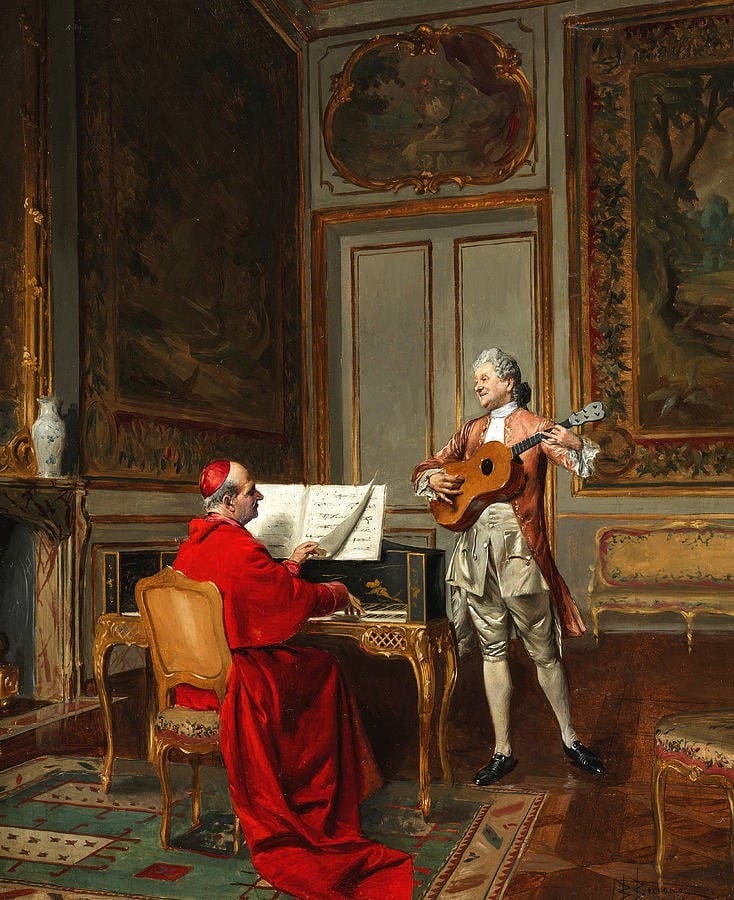
So far, so interesting, but is it really that simple? Remember Tolkien? The one from The Lord of the Rings? He was once accused, during a conversation with C. S. Lewis, of creating precisely this type of amusing, escapist art. In response, Tolkien remarked that only jailers talk so much about escapes. Tolkien and C.S. Lewis made the case for why what we call "escapism" is actually worthy of the title of magic. For Tolkien, in light of the horrors of the modern world (he fought in World War I), there was no real way to combat the ugliness of reality. Tolkien, a philologist, tried his utmost to salvage the beauty of the past and bring it into the lives of those around him. His art, though not something that directly helps one ‘deal’ with life, might be something even more than that—it tries to offer a little redemption, beauty, in a world that is simply too ugly to participate in.
In his own words: "For it is after all possible for a rational man, after reflection (quite unconnected with fairy-story or romance), to arrive at the condemnation, implicit at least in the mere silence of ‘escapist’ literature, of progressive things like factories, or the machine-guns and bombs that appear to be their most natural and inevitable, dare we say ‘inexorable’, products."
Scruton on the art of drinking
The philosopher Roger Scruton, who passed away recently, wrote an unusual book in the history of art philosophy: I Drink Therefore I Am. As you might guess, the book delves into the philosophy of drinking alcohol. Early in the book, Scruton offers an intriguing argument that I thought worth sharing here.
Scruton’s argument operates on two complementary levels. The first is aesthetic, but the second is theological. Let's begin with the aesthetic. Scruton laments that the "new wine lovers" (it's worth noting that Scruton is arguably the poster-boy of snobby philosophers) no longer speak about where the wine comes from, the soil, and the place—but rather about the grape variety and the brand. They are in search of the available, uniform, and consistent wine. The kind that's easy to remember. By contrast, Scruton notes that the early middle-class wine connoisseurs (from whom he hails) speak of the rare, the unique, the poetry expressed in the specific drink before them.
In his view, these new enthusiasts aren't drinking wine; they’re merely drinking fermented grape juice. Even when they talk about the land, they discuss it in quasi-geological terms, rather than in terms of place. So what's his point here?
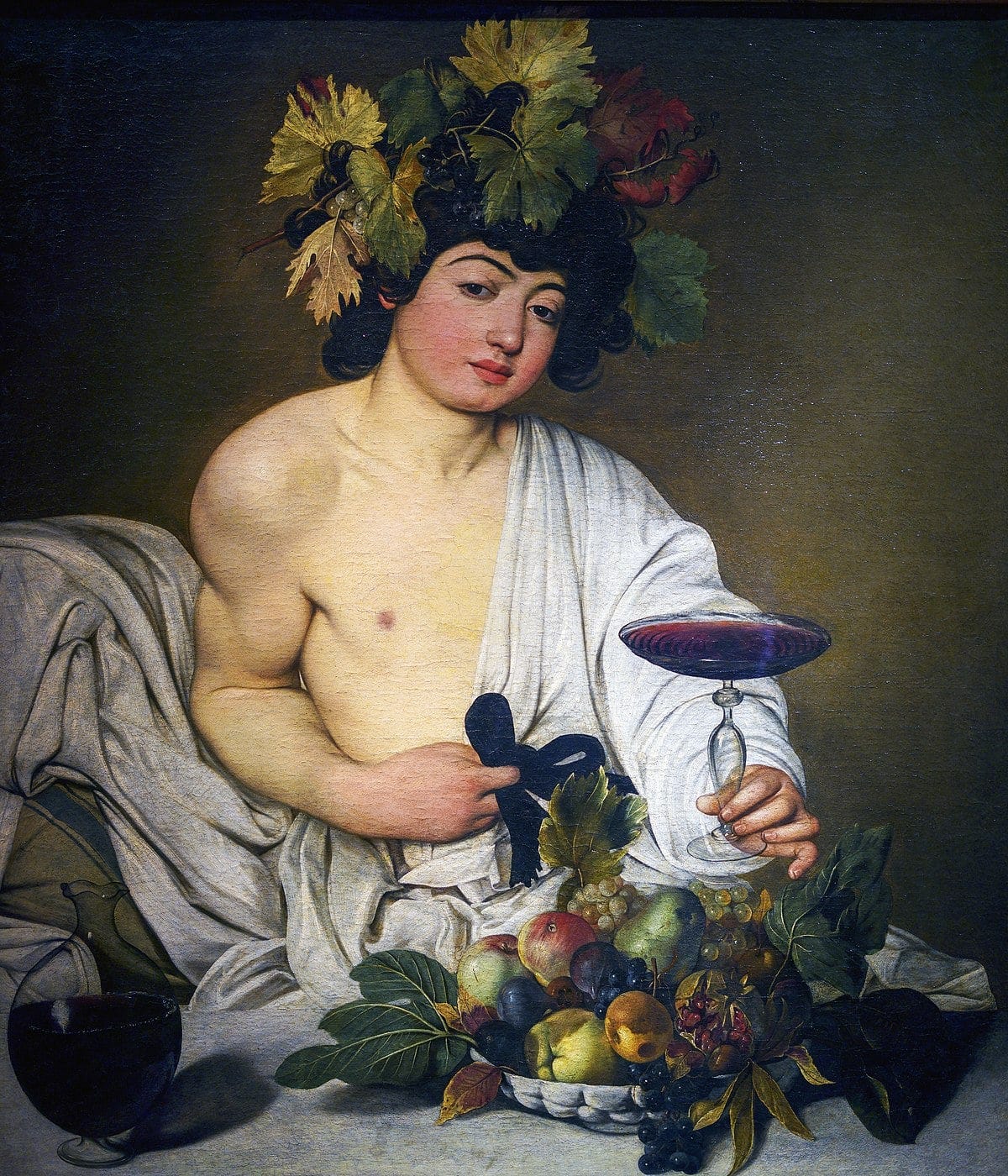
Scruton argues that wine is an individual. You can understand his point through an analogy. Let’s think of wine as a person. Yes, a person has generic traits, such as whether they grew up in a "mountainous" or "flat" region. They might even have a certain nationality. But if you’re asked to describe a specific person that your conversational partner wants to meet, all these traits ultimately become insignificant. What matters is their character, the very thing that makes them different from others, for better or worse. Similarly, Scruton implies, the experience of tasting wine introduces you to an individual that should be appreciated despite its generic traits, not because of them. The 'soil' from which the wine comes is equivalent to the 'place' from which a person hails. A place with stories, history, a calendar, saints, and local gods—all of which shed a certain light on the person’s character.
Think, my dear Jerusalemites, about a person you’re told comes from the Hasidic community of Belz in Jerusalem. You already have an idea of whom you’re likely to meet. But then, alas, the person you meet is not dressed in black clothing. He, in a sense, 'rebels' against his local god, and that too is part of him. Likewise, when you encounter a wine (or whisky) that goes against its own place’s tradition, tasting it holds an element of meeting rebellion. Even if it closely resembles whisky from another region in its general traits—in fact, it couldn’t be more different from the 'devout' whisky that typically characterizes its region. For Scruton, this analogical space is what differentiates whether we are drinking, let’s say, fermented grape juice—something meant only for our taste buds—or whether we are drinking wine, something meant for us as human beings.
This leads us to his complementary argument, the theological one. The wine as an individual, a gift we receive from a particular place, is really a 'gift' from the local god of that place. Wine is always a pagan matter because it has a certain uniqueness that the abstract, monotheistic god supposedly lacks. It’s not general, not universal—it’s an expression of the celebrations of a specific place. Wine is always a celebration of a rebellious god, a local saint, a pocket of resistance against the universal rule of the uniform and the banal.
Hegel on Art
Hegel saw art as the sensory expression of the free spirit. In his lectures on aesthetics, he extensively discussed Indian, Chinese, Jewish, Egyptian art, and more. However, he ultimately viewed the origins of true art with the Greeks. Given that Hegel was relatively well-versed (for a philosopher) in art history, the question arises—why the Greeks?
To some extent, this stems from Hegel's characterization of art. The goal of art, according to him, is to produce an object that expresses the free spirit (whether human or divine). Apart from the Greeks, the Egyptians, in Hegel's view, came the closest to achieving this. However, what the Egyptians created was seen by him as "pre-art" or "symbolic art." This largely stems from how Hegel understood Egyptian religion. The Egyptians, according to him, were the first to fully attribute autonomy to the realm of the spirit, distinct from the realm of nature. For the Egyptians, the realm of the spirit was entirely equated with the realm of the dead. They attributed immortality to the soul, which was separate from the sensory/natural world but was present in it through sensory representations. This is the compromise of symbolic art. Its ‘content’—what it points to—lies beyond the art itself. The art directs us toward its content, but the artwork itself remains insignificant.

Enter the Greeks. Hegel also saw Greek art as naturally arising from their religion. However, unlike the Egyptians, Greek art did not 'serve' religion—it was religion. The Greek poets, not the philosophers or theologians, breathed life into the gods. If we look at Greek art, we see that the gods and heroes are depicted ideally, beyond the frailty we associate with the natural world. Aging, suffering from the cruel randomness of nature, ugliness, and misfortune—all these are absent from how the Greeks depicted the freedom of their gods and heroes. These figures are above nature and able to bend it to their will. The free spirit creates itself in the ideal form it desires, primarily as the perfect human figure. In other words, perfect subjectivity finds objective expression in the ideal forms of sculpture.
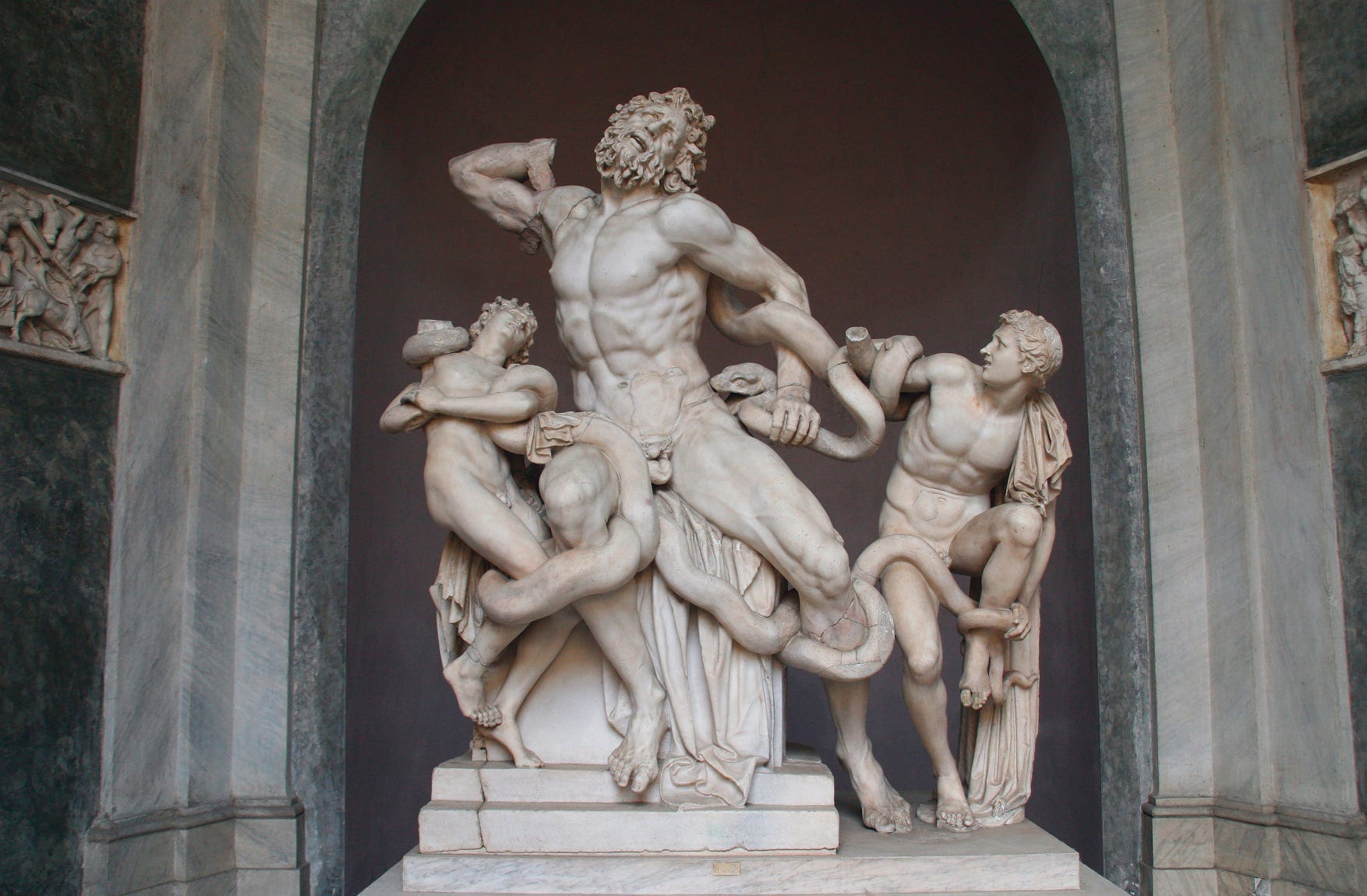
Where do we go from here? Didn’t the Greeks already achieve everything? This is where the saga that Hegel began, but which we are still unraveling, continues. According to Hegel, the highest stage of art builds on two things: on the one hand, the inability of nature and the senses to fully embody the free spirit, as seen with the Egyptians, and on the other hand, the perfect expression of the free spirit in nature and the senses, as achieved in Greek art. This is Romantic art. By 'Romantic art,' Hegel does not merely refer to the dominant school of painting of his time, but to the entirety of Christian art across the ages. This is art that expresses both the freedom and perfection of the spirit, much like the Greeks, but does so by incorporating a dimension of subjective "inwardness" into the artwork.
In Greek art, the perfect expression of subjectivity is achieved when subjectivity manages to create something objective and perfect according to its will. However, in some sense, the subjectivity ‘disappears’ from the final product. Greek sculptures, though they appear as if they are in motion, alive, and breathing, lack an "inner" dimension that we recognize in the people around us. Subjective expression does not in itself contain subjectivity. The free creation of spirit does not contain spirit itself. There is something Frankenstein-like about it.
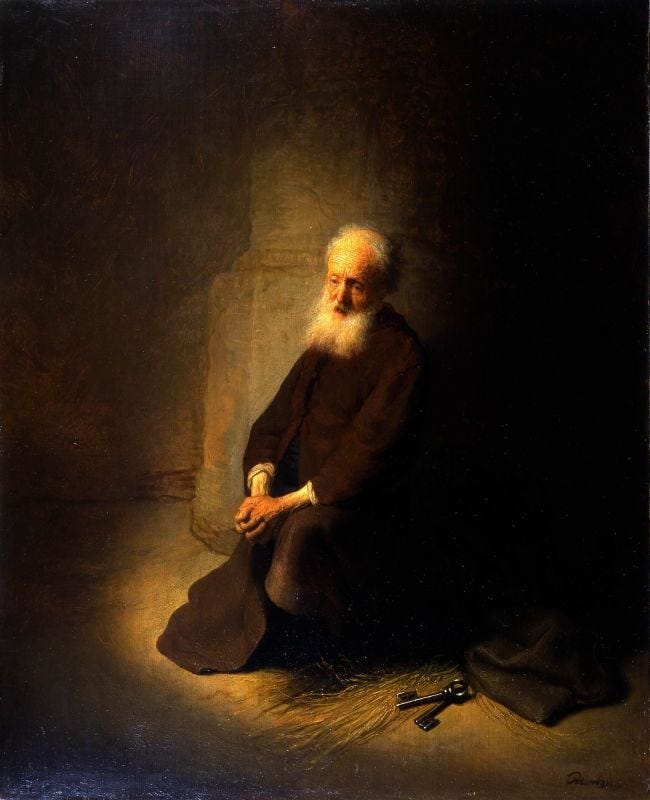
In contrast, Christian art introduced the ideal of embedding the "inwardness" of the creator into the creation itself. Rembrandt’s St. Peter (included) is an example of a figure who is, on the one hand, old and vulnerable—someone we empathize with, someone who has clearly experienced life and suffering—but on the other hand, remains beautiful, idealized. This type of art is what most of us intuitively recognize as a higher form of art, one that points to an "inwardness" that goes beyond the painting and the world around us. It is an inwardness we elevate. In some sense, this is the expression of grace in nature—simultaneously present in the world but also pointing beyond it.
Like Egyptian art, Hegel considered Romantic art to be not art in the full sense of the word. But unlike Egyptian art, it is something beyond art. It gestures toward the realms of theology and philosophy, not merely to the kingdom of the dead.