


Following the new Harry Potter series soon to air on HBO and the tense anticipation surrounding it, I thought this would be a good time to write something self-indulgent — an apology for the Harry Potter book series. But first, every good apology needs accusers, preferably as serious as possible. To find the best accusers, one must, as Socrates argued in his own Apology, disregard the minor accusers and try to reach the source of their inspiration — those who gave a more comprehensive and complete expression of the charges at trial. Fortunately, the candidates for this role, for those familiar with “the scene,” are almost self-evident. Our first accuser is Harold Bloom, who at the time he wrote his scathing critique of Harry Potter — in the year 2000 — the series had produced “only” four books (of which he read only the first) and sold “only” 35 million copies. Harold Bloom, for those who have not encountered this towering figure, is probably one of the most important literary scholars and critics of the twentieth century — an incorrigible bibliophile of a talent one is lucky to see once in a generation. Our second accuser, A. S. Byatt, is a novelist and scholar. As a novelist, there was hardly an important prize she did not receive, apart from the Nobel, to which she was also nominated. As a scholar, she was — and in fact remains — one of the foremost scholars of the philosopher and novelist Iris Murdoch. She wrote her critique of the Harry Potter series in 2003, when the series had published five books and sold only 200 million copies.
We have thus passed the introduction of the Dramatis personae. Now, we shall grant the accusers their opening statement. We will begin with Bloom, both out of deference to his age and the brevity he employed, and respond to his arguments. Bloom’s first criticism concerns the fact that the book is simply poorly written. For Bloom, this is not — as we shall see, rightly — something to hold against the book if it possesses other qualities. So Bloom turns to a critique of the book’s creative vision. The second criticism is about the derivativeness of the story. In his view, it is first and foremost a less successful retelling of Thomas Hughes’s Tom Brown’s School Days, seen through the prism of Tolkien’s magic — toward whom, as is well known, Bloom is also not particularly gracious. Between the lines, Bloom is also essentially criticizing the choice of the fantasy genre over the realism of the source material. Ursula Le Guin, with considerably more justification, also laments the derivativeness of the wizard-school concept. Bloom’s implied third criticism of Rowling’s creative vision is that sex barely enters the Harry Potter universe — a criticism that recurs in Byatt’s work in greater detail, so we will defer engagement with it. Bloom’s fourth criticism indirectly concerns the fact that the book is implausible — for example, it is never explained why Harry is given to his Muggle relatives specifically (shhhh... I know, I know). In addition to these criticisms, Bloom raises two important questions: (a) What does Harry Potter’s success tell us about millennial culture? and (b) Does the series fulfill for many their need for unreality, for fantasy, and is this the secret of its success? These two questions will not receive thematic discussion here but will be answered between the lines.
Let us begin, then, with a response to the first criticism — that the book is poorly written. The defense accepts the accuser’s claims entirely but requests a refinement of his words. Bloom correctly notes that Rowling’s prose is riddled with clichés, and he even provides examples. Anyone who has ever read somewhat more serious fiction cannot help but notice this, at least as an adult. But Bloom acknowledges that the question of Rowling’s prose is clearly secondary. After all, sophisticated prose — even the kind that challenges the reader — does so in service of some purpose. Joyce’s style, for instance, serves, among other things, to mediate a particular experience of reality to the reader that would otherwise be absolutely impossible to convey. We shall therefore call this claim of Bloom’s a derivative claim: its truth value genuinely depends on that of his other claims, as he himself admits.
The second criticism concerns the derivativeness of the book — its being, in effect, blatantly unoriginal. Here we enter deeper waters. I do think that here too Bloom is right, at least at the descriptive level. Indeed, most of Rowling’s concepts have precedents, and it is difficult to attribute originality to her creative vision. A first defense, and a rather complicated one, would be to say that as in many other cases in Western literature, what we have here is an “original combination” or “originality of execution.” I am not sure one can seriously defend even these claims. A second, more honest defense ought to bring to the foreground Bloom’s preconception — not to say theological conviction — regarding the status of originality in literature, and examine it. For Bloom, as a devotee of the Romantics of the eighteenth and nineteenth centuries, and no less as a Gnostic, the originality of literary genius constitutes the revelation for which it is worth living, no less.
In this sense, Bloom himself gets into considerable trouble when he approaches texts like the Bible or Homer, which are difficult if not impossible to defend in these terms. He is compelled to invent entirely a figure of anonymous genius who would edit, in a stroke of genius, all the material given to her — or at least most of it — into a corpus that would bear the stigmata of genius. In other words, for Bloom, the written, literary work must be stamped with its creator’s genius in order for the revelation it offers to carry weight. In this sense, Bloom is almost allergic to an entire land of genius — that of the storyteller. The storyteller is indeed original to some degree, but unlike the novelist, this quality is far from characterizing his essence. In many respects, the storyteller, in contrast to the poetics of the creative genius, is an almost prosaic figure. It is first and foremost a craft, and as such, its achievements — at least as far as the craftsmen are concerned — are primarily technical, and above all, the product of the craft is mostly lost in terms of purposes entirely external to those the craftsman held at the time of creation itself. This is, of course, heresy of the first order for Bloom. I do not mean to go so far as to say that Bloom’s criterion is wrong for all literary works — only to note that it is not all-encompassing, and its application to particular cases requires justification. In this specific case, even if Rowling’s “creative vision” is not original and Harry Potter itself is not an original series, we have not yet said much by saying so.
At this point, I wish to propose a hypothesis. The latent question of Bloom, and subsequently the explicit question of Byatt, is why so many people around the world have taken Harry Potter to their hearts. The thesis I wish to propose — against Bloom’s suggestion that it is a desire for fantasy, and Byatt’s suggestion, which we shall see, also moves in these directions and which we shall critique — is that the pull of Harry Potter is not literary at all, but rather, ironically, mythic. To understand this, we first need to understand why Bloom’s prophecy — which failed regarding Tolkien but far more so regarding Harry Potter — that it was a passing fad and a mediocre-at-best product catering to the most populist fantasies, is in all likelihood a misreading of the situation. When Bloom wrote, as mentioned, only 35 million copies of the book had been sold. Bloom is absolutely right that this proves nothing. Popular literature is, by its nature, popular. It does appeal to the lowest common denominator. Tolkien’s achievements in his time were more modest. Even when Byatt wrote about Harry Potter, it was still in the territory of popularity, with 200 million copies. Ultimately, 600 million copies of Harry Potter were sold, and at certain points, its daily or weekly sales rate exceeded that of the Bible itself on a global level. This means that 1 in every 15 people in the world, or 6 out of every 10 people in the West, purchased a book in the series. These are simply no longer the metrics of a popular or mass-culture phenomenon in the cultural sense, but of a civilizational, and perhaps even mythological phenomenon. Not only because of the quantity itself, but also because of the question that Byatt seems to pose later: this appears to be a series that adults who grew up on it return to, and a significant portion of them do not return to it merely for the rest it offers from real life. Rowling’s power, it turns out, is more as a medium than as a genius. Contrary to Bloom’s claims, such a phenomenon is in all likelihood not merely a passing fad, and indeed the Potter brand shows no signs of decline.
At this point, we must return, again, to Bloom’s foundational assumptions. His Gnostic-Kabbalistic commitment compels an almost total apathy toward the masses and historical phenomena. Yet literature, or at the very least stories, sometimes demonstrate just such a temperament — indifferent to the injuries of history. A test even Bloom accepts is that the eternal survives time, and in this sense great literature is not forgotten. But it is not forgotten precisely because even Father Time has a certain fondness for literature, even if he is generally indifferent to trends and mass phenomena. This test, it seems, Harry Potter will survive, and it will survive it, like its predecessors, despite not being the product of genius.
So we have arrived at Bloom’s fourth criticism — that some plot turns in the book are implausible. To the audience’s chagrin, we will defer the easy defense that Bloom evidently did not read the book well and did not remember that even in the first book there is a detailed discussion of why young Harry is left with the dreadful Dursleys and not with a friendly wizard couple. Bloom’s point, here too, is essentially correct. There is hardly a single plot turn in Harry Potter that is plausible. The more precise formulation of this claim has been raised recently, for instance, by Jason Pargin, the former editor of Cracked and an author in his own right. Pargin points out, for example, that although the characters discuss it, when one thinks about the entire story from Dumbledore’s perspective, it is simply absurd. Things like the “Time Turner” or Felix Felicis, introduced as classic Deus ex machina, are forgotten shortly after as possibilities in the world. Quidditch, which makes perfect sense as the scoring system for the school’s Houses, lacks all logic as an independent sport. The financial system, of course, is also illogical. In effect, both Bloom and Pargin point out that the Harry Potter series conspicuously abandons one of the most important literary principles since Aristotle: that a good story must be plausible. If history, for example, is accurate, it is certainly not plausible. Historical events do not readily submit to nontrivial laws of internal logic in the course of affairs, because history deals with particular things. Literature or epic poetry, by contrast, must exhibit necessity — or an internal logic that holds events together as probable within some comprehensible whole.
Here we also arrive at the reason it is nearly impossible to become a Harry Potter fan as an adult. For Aristotle, every story requires a certain measure of “suspension of disbelief” regarding the world. We need to be able to set aside what we know about the internal logic of the world in order to make room at least for the internal logic, or plausibility, of the story itself. Children are naturally much more talented at this, simply because they have not yet formed a more or less consistent belief system about the world. Conversely, it is not at all rare for adult readers not to read fantasy literature, or even literary fiction, very often. So far, Promotor Fidei. In Harry Potter, by contrast, we encounter adults who not only return to Harry Potter in their maturity as repose, but with great joy. This is possible because those adults have, to a degree, preserved the narrow cognitive walls of their childhood in relation to this story. Those adults, to a large extent, undergo a process analogous to the one a religious person undergoes in relation to the religious myth of their childhood as they mature. This analogy is not accidental. In my view, the same mechanism that enables both of these transitions operates in both cases, and it also explains not only why it is possible to return to childhood stories in adulthood without noticing their flaws, but why it is almost necessary that a childhood story of a certain quality — a myth — will continue to preoccupy the adult, even if in an entirely different way.
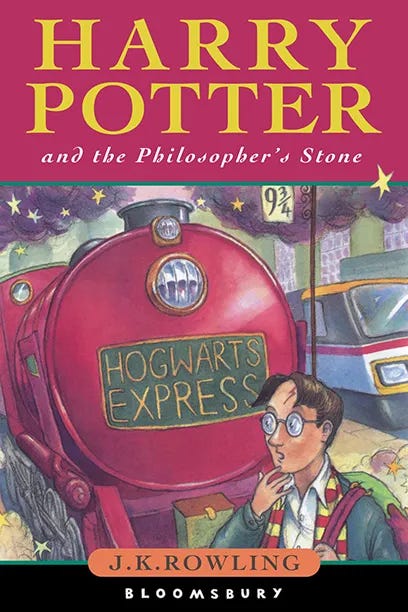
I am not going to answer here the question of why human beings need myths — that is entirely outside the scope of this essay. I take it as a given. But I do think it is important to understand the difference between epic poetry or the novel and myth in order to understand the pull of Harry Potter. If we said that the guiding criterion for literature is necessity or internal logic, then we are still in the realm of “non-contradiction.” But myths, as Claude Lévi-Strauss taught us, obey a different structural logic — that of coherence, or (what is from my perspective the same thing) intelligibility. The realm of non-contradiction is characterized by the fact that a series of statements will not contradict one another. Imagine the following statement: “The heavens are good. Today I ate a fish. Churchill was born in 1874. Dragons have three eyes. A shoe has three legs.” This statement is entirely consistent. But it is nonsense — it is meaningless. It has all the internal logic in the world, but it is simply unintelligible. On the other hand, consider the following statement: “The heavens are angry at the child because he killed the insect. The earth wants to comfort the child and therefore buries the insect. The heavens, in revenge for the earth’s act, caused the earth to always be beneath them.” Here the story is questionably consistent, and at the very least questionably logical. If the heavens could cause the order of the world to change fundamentally, how did they not prevent the child from stepping on the insect if it bothers them so much? We enter into whole paradoxes characteristic of theodicies. On the other hand, this story is certainly coherent. It has a beginning, a middle, and an end. Not only is it coherent — it even explains something about our world as we find it; it makes our world more intelligible. The deeper logical discussions that follow from this somewhat crude distinction I have made here I shall leave aside for now. If Harry Potter is an illogical book, then it necessarily at least compensates for this in the dimension of its coherence.
We have thus summarized Bloom’s criticisms and the possible responses to them. Let us now turn to examine Byatt’s more penetrating arguments, so that we may appreciate the unique spell of Harry Potter. Byatt’s guiding questions, not far from Bloom’s determinations, are what the secret of Harry Potter’s worldwide success is (which in her time was still limited) and why adults continue to be drawn to it. These overarching questions form the organizing framework of her critique, and they will of course receive a certain answer here.
Regarding the first question, Byatt simply answers that in her view, Harry Potter straightforwardly fulfills a psychological need of children in a very successful manner. She enlists the pathology to which Freud gave the name “family romance” to explain what psychological need, supposedly, Harry Potter answers. In brief: the pathology Freud describes is that of children who, for one reason or another, feel that their parents have diminished, insulted, or neglected them. This need not actually occur in reality for this to be the child’s experience. But once certain children feel this way, they develop a fantasy according to which they are actually the children of someone else — someone more successful and better. They also begin to believe they have a unique role in the world that only they can fulfill. In pathological cases, this fantasy ossifies and becomes the child’s actual description of reality: the child behaves and acts in reality as if this were so. If we may borrow a paraphrase of a diagnosis from a physician of Boswell’s era — if a certain patient tells me he sees, together with us, another person who is not there, I do not yet have very great cause for concern. If, on the other hand, he actually begins to behave as though this were reality, there we have a problem.
Byatt argues that Harry Potter, as a series (she did read at least through the fifth book), succeeds because it fulfills this kind of fantasy. The Dursleys serve as the real parents. The wizarding world serves as the fantasy the child develops to escape the real parents. In her view, Potter flees to a world where everyone — good and evil — acknowledges his importance. They try to save or destroy him. The real enemies in the series are in fact the Dursleys. According to Byatt, the series is written from the perspective of a seven- or eight-year-old child. Even when Harry, in the fourth book, is already fifteen and goes on his first “date,” Byatt notes that he behaves like an eight-year-old in terms of his conversational abilities on such a date.
Byatt continues to argue that although Auden and Tolkien wrote extensively on how to construct an “alternative world,” Rowling’s magical world is derivative. We have already seen what one can and should think about the value of originality in this specific case. According to Byatt, the work Rowling managed to do in this regard appeals mainly to children whose “powers of fantasy” are limited. As we have already seen, it is precisely because children’s powers of fantasy are less limited that they are able to be drawn into a world as flimsily constructed as Rowling’s. However, Byatt’s important claim is that the magical world Rowling created is not merely derivative but symbiotic with the real world. In a certain sense, the magical world is a “caricature” of the real world. The magic in it is entirely mechanical, and there is no room in her world for the numinous (holiness, the presence of the wholly other, according to Rudolf Otto), and this stems from the same limitation of imagination she attributed to the children who “buy into” this story. The numinous, of course, is a more routine feature in children’s stories of all kinds. You know, things like the dark forest, dangerous creatures, powerful forces, and mystery (her examples, I promise). In short, these books are convenient escapism (and we of course remember who likes to talk about escapes).
According to Byatt, the reason adults continue to read these books? Her answer is that at least in part it is a desire for comfort. Childhood readings remain comfortable for most of us. “We love regression,” in her view. As she reports about herself, this is at least part of the reason she reads Tolkien when she is ill. The absence of sexuality in his world is something she finds comforting. In her view, in a formulation that probably traces back to the Castoriadis school — likely through Guattari — we love to regress to the more primitive stages of culture where external and fantastic forces taught us what good and evil are. With good writers, we manage to perform this regression relatively successfully. Our world, in which we are fully in control, sometimes feels meaningless, so we need to return to a world where external forces are in control in order to re-experience the sense of meaning we mourn. In Le Guin, for instance, she finds a coherent anthropological world in which real magic plays a role. In Rowling there is no such magic; Rowling’s magic, in her view, is “small, school-framed, and dangerous only because she says it is dangerous.”
From there Byatt moves to the moralist’s position and argues that precisely because Rowling’s magic lacks mystery, it is “magic for our time” — a time in which adults neither know nor care about “mystery.” Urban people, not people of the real world. People not known to distinguish between a substitute for magic and real magic — precisely because as children they invested their limited imaginative capacities in substitutes for magic rather than in real magic.
So ends the prosecution’s case. Since Byatt’s critique is coherent to an unusual degree, I think it would not be right to address it, as I did with Bloom’s critique, in numbered fashion. Instead, I will try to offer a discussion alternative to Byatt’s and see whether her claims hold up. As we shall see, unlike Bloom’s claims, her claims are not simply wrong or right but present errors from which one can and should learn.
First, the matter of the “family romance.” If one actually examines the short entry Freud devoted to this phenomenon, one can see that even Freud himself makes room for the speculation that this is precisely the kind of fantasy that likely lies at the foundation of many great myths — a thought of which there is no trace in Byatt’s words, simply because it does not serve her argument. But the fascinating point in this critique of Byatt’s is almost trivial for Potter-heads. “The Dursleys are the real enemies.” One could not have better written a total failure to understand these books. The logic that the wizarding world is good and the Muggle world is evil is simply the declared ideology of the “Death Eaters.” The everyday Muggle world, in which there is nothing wondrous, no nobility, and everyone in it is a herd animal — this is almost a speech that writes itself, one that was probably heard at some “pureblood” gathering at one point or another. In this sense, Byatt may be right regarding the psychological dimension of the child reading the first book for the first time, but this transforms into an entirely different fantasy as the series progresses, and it is remarkable that Byatt, who reached the fifth book, somehow missed this.
The internal political-public debate within the wizarding world itself is precisely this debate. How much room, if any, should be allocated to Muggles, to the ordinary and magic-less world, within the wizarding world? Or, as Grindelwald once proposed, should the wizarding world simply rule the Muggle world? Should the wizarding world continue to hide or not? In this sense, Harry is an exceptionally unusual hybrid in the wizarding world of Harry Potter: he is effectively a “pureblood” (well, actually a half-blood) raised in a Muggle family, while in the seventh book, children who are truly the offspring of Muggle parents, partially or fully, flee from the Ministry of Magic and the school system that the Death Eaters have seized. This is where it gets interesting, because Byatt’s intuition better captures the thematic debate at the foundation of the series’ plot. Many have pointed out that the entire discussion is analogous to the way Nazi antisemitism led to the persecution of the Jews. This may be true, insofar as Rowling’s original intention is concerned. But it completely misses what this discussion truly reflects, and what Byatt touches upon: what place should the numinous occupy in relation to the everyday? When one understands this, and how truly fascinating a question it is — not to mention a question with political implications — the myth of Harry Potter and its pull become far clearer.
Byatt’s reading is also strange with respect to the account given of Voldemort’s biography in the sixth book (which was not available to her when she wrote): there and in the book that followed, the stunning similarity between the biographies of Harry and Tom Riddle gives us a unique view of how Harry’s character is not merely the fulfillment of a childhood fantasy, but the specific way in which he bore that biography, that fantasy, in contrast to Voldemort. The “family romance” takes on an entirely different meaning when one sees the pathological expression in Voldemort versus the — at least by contrast — heroic expression in Harry.
Here again we must make slight corrections to Byatt’s critique. The numinous, the mysterious, is not actually absent from these books. Even the list she herself provides of numinous elements in children’s books does not contain a single component that is absent from these books — to a degree that I have no idea how she reached the fifth book and missed this. Presumably in the same way Bloom missed a discussion that was right there in the opening pages of the book, from which he even quotes. The dark forest? Present — and it is even at the center of especially terrifying episodes in the first, second, and third books. Dangerous creatures? Well, not just dangerous — I don’t understand how one can miss this — but some of them are without question even Unheimlich, truly uncanny, like the Dementors, creatures that drain hope and joy from the person they hunt and ultimately their soul. Powerful forces and mystery? This is indeed an element somewhat absent from the earlier books, though not entirely. It is a somewhat elusive story, but although magic in Harry Potter is indeed technical, there are certain levels that Dumbledore, Nicolas Flamel, the Hogwarts founders, certain objects, and perhaps even Voldemort himself reach in this “technical” magic that do not quite submit to the standard “laws” of ordinary wizards, lending this magic a touch of the authentic Gandalf-like aura of a deeper magic. Though it is fair to say that even here we are not yet dealing with an especially deep expression of magic.
I say it is not an absent element because, from the first book onward, no one knows how Harry survived when a spell that by all accounts should kill struck him and did not kill him. I believe this is even the title of one of the chapters in the first book. From the very start, the series hints that there exists a truly numinous dimension of magic within the wizarding world — and probably outside it as well — that is above standard technical magic. The wizarding world itself is of course a kind of pale numinous world, but not one devoid of the source. In certain respects, this is the world of organized religion and its relationship to the religious dimension. The balance between them constitutes part of the series’ appeal. In a manner befitting the Christian tradition of Chivalry, the true magic in Harry Potter is the love of self-sacrifice — the love that explains why Harry survived the killing curse not once, but twice. This magic even becomes a recurring theme in the series, one that Dumbledore, the archetype of the wise-holy-old-man, speaks about in a way that none of the characters — except perhaps Harry in the end — truly internalizes fully. How love can defeat particularly powerful technical forces, or even deep and dark evil.
The most interesting critique, however, comes in my view from both Bloom and Byatt. Both complain, in one way or another, that this series contains no sex. As we all know, sex is the most important thing in the world. But do we really know this? Are we not confusing sex with something else? In Byatt’s case, it is apparent that sex is an adult matter but very much present in children. The allusion to Freud is no accident. Bloom’s admiration for Freud is also no accident. Freud offered entire generations of bourgeois throughout the twentieth century an answer to the presence of the truly sublime in the world: the sublime is sex. Either sex itself, or the pseudo-naturalistic mechanisms Freud placed at the foundation of sex, are responsible for everything good and bad in the human species. Nonetheless, it seems to me that Foucault judged more correctly when he saw that the obsessive preoccupation with sex is simply a confused theory about the origins of the erotic. As Foucault himself said when asked about The History of Sexuality and whether he would write about sexual practices — “Sex is boring; sexuality is fascinating.” He may have slightly overstated the point, but his intention was entirely justified. Sex does create conflict, but is it the only kind of conflict that has literary respectability?
The erotic, as a phenomenon, is not limited to sex alone. Sex in this sense is perhaps the lowest common denominator through which one can approach the phenomenon, but it is very far from being the center of human erotic activity and certainly not its pinnacle. What guides what fascinates us is without question the erotic. Sex, in this sense, is a particular case of what attracts and animates us, important as it may be. Yet an entire generation of intellectuals was raised on the idea that the most serious human business is sex — free sex, sexual identity, and so on. Sex is serious. Sex is important. In this sense, Byatt finds it “comforting” that in Tolkien or Rowling there is no sex. In Bloom there is an entire Freudian obsession with Shakespeare’s bisexuality that this is not the place to enter into.
To understand where the true erotics of the Harry Potter myth lie, we must return to Claude Lévi-Strauss — whom, for this purpose, I shall read somewhat through Lacan. For Lévi-Strauss, the coherence of a mythology is not complete. What makes a mythology active is a “missing component” in the coherence — a component whose absence causes the entire system, all the components, to shift from place to place trying to fill the gap. This movement, what drives it, “produces” the unique coherence of mythologies. In this sense, in the Harry Potter series, what drives the absence of equilibrium in the central plot is that Voldemort’s soul is not in its place, in all the various associative dimensions of that statement. At the global level, as we have seen, there is no real, agreed-upon place for the boundary between the numinous world and the Muggle world. The absence of this place is what sets the true political dynamics of the wizarding world in motion.
To understand this topic in somewhat greater depth, we need the help of Lacan, Freud’s wiser successor. For Lacan, the symbolic order — the mythological, in our case — in the world exhibits a more or less uniform lawfulness, except that it is not complete. What drives the symbolic order is precisely that it pursues a signifier that is not in its place. Everyone tries to hold the pure signifier, as in Lacan’s analysis in his seminar on Poe’s “The Purloined Letter,” only to discover that it has slipped away again. That reality is not fully captured in the symbolic dimension. The desire for “the Real” — the source of attraction, the source of conflict, what is occasionally identified too essentially with sex — misses its mark again and again when it presumes it can manipulate reality enough to restore the symbolic order. In our context, the two dimensions we discussed — the place of the boundary between the everyday world and the numinous world, and Voldemort’s soul — both exhibit characteristics that complete the paradoxical dimension of mythological paradoxicality. In the case of the boundary between the everyday world and the numinous world, the series concludes that neither the numinous world in itself nor the Muggle world in itself exclusively possesses real magic, as mentioned. It is simply not in this game. There is no way to “cut” the boundary in reality in one way or another that would restore this boundary to its place. Again, like the letter in Poe’s story, even the near-final piece of Voldemort’s soul ultimately turns out to reside not in some object in reality, but in a different order — in Harry’s own soul. Only after he is freed from this remnant of soul does Voldemort cease to be immortal and the symbolic order returns to itself. In both of these dimensions lies the true erotic dimension of the series.
Finally, we must step outside the discussion we have entered for a moment to deliver the just verdict. Harry Potter is rather poor literature. Its prose is terrible, and by accepted literary standards it is very difficult to defend. Nevertheless, its wide distribution among children and the continuing, unusual return of adults to it — in a way that adults do not normally return to children’s literature — demands an explanation. The answer to that demand we found in the mythological pull of the Harry Potter story. However, mythology is not necessarily sublime, and the boundary between it and folklore is not always clear. The value of Harry Potter as a work of art still hangs in the air, and in my opinion it would be difficult to the point of indecency to place it in the ranks of the sublime works of literature. But as we have seen, its literary status is not necessarily the discussion here. Harry Potter tells us something else. Whether it is something worth hearing already touches on deeper questions regarding its message — which at least now, I hope, we understand where to look for.
It's an interesting essay, and thank you for summarising the views of Bloom and Byant.
I have a critique, though, or rather what I hope is a theme to build on. I think that a key strength of the series -- and a key reason of its longevity, like Tolkien's series -- is that it provides a complex moral guide in the form of a mythos. Complex, because Harry and his friends do not have all the answers, and actually are forced to evolve and abandon simplistic positions as time goes on; Snape and Dudley are two key examples.
In this sense it's perfectly normal to be fascinated and start to love the series as an adult rather than a child; I know more than one person who did. And it's perfectly normal to then use the series to signal allegiance to a specific moral outlook; as we can see with protesters naming themselves "Dumbledore's army".
And in this light the preoccupation of Bloom and Byatt on the lack of the sexual dimension (which, incidentally, is not that true--see the sixth book for example and the numerous dalliance subplots) seems honestly to widely miss the mark.
As someone who encountered these books as an adult (mid thirties) I find essays like this (and Bloom’s critique) incomprehensible. Rowling books are derivative, of the canon of western esotericism. We encounter a TS Eliot reference in the first few pages (Dumbledore’s scar) and proceed to meet Ibsen’s Hedwig, Goethe’s Green Snake and Beautiful Lily and learn that Harry is a “seeker” whose unique power stems from his powerful yearning to reunite with the World Soul almost literally reproduced in the Mirror of Erised. Rowling has made no secret of her use of alchemy as the framework of the books. Yet none of these criticisms, including yours, consider the books as Christian NeoPlatonic allegory, dismissing them as poorly written and non literary. It’s a bit like reading a criticism of Ulysses which dismisses the book as obscene and poorly written without once mentioning its relationship to Homer. Is it too obvious or too dense?