


We frequently hear that we must do something or refrain from doing it for reasons of "morality." This phenomenon has two sides. On one hand, there are intellectuals, particularly philosophers, who see "morality" as a specialized field of expertise. This field has its own conventions, ways of conducting discussions, and internal tradition. Moreover, it appears that this field allows for judgment regarding other practical domains. For example, the moral judge may intervene in the decisions of a general, an engineer, or an accountant—not from the modest position of peer critique, but from a superior stance of an overarching discipline. In this sense, morality is somewhat elitist, though, as we shall see, it is not entirely clear what exactly sustains it.
On the other hand, morality is something that everyone is supposed to know, everyone understands it, and therefore anyone can make moral claims and be subject to such claims. In this sense, morality manifests itself in vulgar as well as technocratic forms. It is, in this way, a thoroughly mass phenomenon. It is difficult to think of another field that has such a vast gap between experts and their pretensions and the general public. But there are also specific characteristics of the moral speaker who "activates" discourse of this kind.
Frequently, this position resembles that of a preacher or a prophet standing at the gates to rebuke. This is, of course, part of our broader cultural heritage of public intellectuals, but at times it seems as if this is the only mode of speech available to certain intellectuals. Our tradition also includes other modes of discourse: that of the explainer, the informer, the persuader, the diplomat, the philosopher. Yet it seems no coincidence that those engaged in morality tend to prefer a mode of speech that belongs to a grand religious tradition of preaching aimed at repentance. All too often, the public intellectual specializing in morality—or at least sufficiently expert to appropriate for themselves the position of rebuker in public discussion—approaches the discourse with sanctimonious zeal.
The process of sanctimony is entirely reflexive: the preacher purifies themselves of sin by setting themselves apart from the collective and, at least for the duration of their sermon, assumes the position of the judge—a position distinct from that of "them."
These figures also provoke a special kind of discomfort. I think the most apt recent representation of this personality type in popular culture is the character of "The High Sparrow" from Game of Thrones. Sanctimony is often accompanied by a certain kind of fanaticism. Beyond that, I believe that the source of the discomfort in these cases stems from a form of "straddling both sides," a characteristic frequently found in such figures. As noted earlier, they often seek an almost entirely transcendent position above the social order, claiming near-divine authority over it, while at the same time being deeply embedded within it, holding a very particular stance within its framework. It seems to me that the chimeric nature of this position is what profoundly defines it.
I have taken some time to characterize the type of figure that the moral person assumes when sitting in judgment over moral issues for two reasons. First, as we shall see, true ethics should, first and foremost, take descriptions and character portrayals seriously. Second, because I wish to argue that this characterization is not arbitrary but stems from a theoretical structure that both Alasdair MacIntyre and Bernard Williams identified as an object of critique.
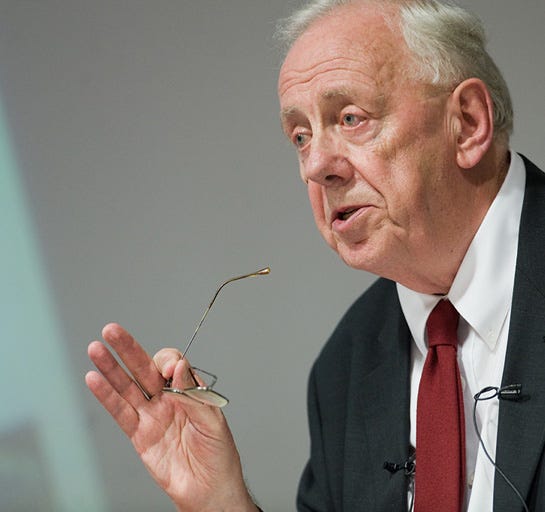
So what, essentially, is morality? We will begin with MacIntyre’s description, as in some respects it is more comprehensive, and then move on to Williams’s account. Finally, I will attempt to outline guidelines for an alternative approach within public discourse.
According to MacIntyre, morality has six characteristics:
Morality is fundamentally religiously neutral and thus belongs to the history of secularism. It is supposed to be valid regardless of specific religious beliefs, which at most can serve as auxiliary conditions.
Morality is universally binding, independent of social status, culture, etc., and must therefore be known to all.
Morality serves as a counterweight to our desires. It limits them and obliges us to consider the needs of others. In other words, the Western discourse that develops around "egoism" is particularly connected to the rise of morality, which both depends on and is meant to serve as a remedy for it.
Morality is abstract, whereas human action is highly specific. Morality remains neutral regarding the particular lives, private choices, and especially the life paths individuals may adopt.
Morality is the supreme judge of competing ethical traditions. For example, conservatives and liberals tend to treat morality as an independent arbiter on which both ostensibly rely to resolve their conflicts.
Morality raises a historically specific set of problems. One such problem is the extent of independence we can attribute to a person’s decisions when judging whether they made them autonomously. Another problem is that of natural rights. Another still is the maximization of overall welfare. Each such claim or problem has an absolute validity. The result is a society that swings aggressively from one form of reasoning to another. MacIntyre especially urges us to recognize that identifying the patterns of public rhetoric on morality gives us a method—an awareness that morality was not always as it is and is not necessarily the best system—but this awareness lacks rhetorical force. This moral system is extraordinarily powerful.
For Williams, the foundation of morality lies in the individual’s commitment to some universal duty. Williams devotes much effort to demonstrating that what he calls "the moral system" actually establishes a very specific kind of rationality, which he believes is almost entirely bound to the Christian tradition in its Kantian form. One might think that Williams’s characterization of morality contradicts MacIntyre’s, but this is only partially true. Williams argues that the person who thinks morally sees their own life—their actions and decisions—as something requiring external justification. The image is that of Dies Irae (Day of Wrath). In Williams’s view, this religious imagery has expired, and at least MacIntyre, for example, does not seem to need it. But the connection to the religious tradition explains some of the characteristics I discussed earlier. The specific activity of the preacher arises from the context of an impending judgment day and the extensive efforts of moral revivalism.
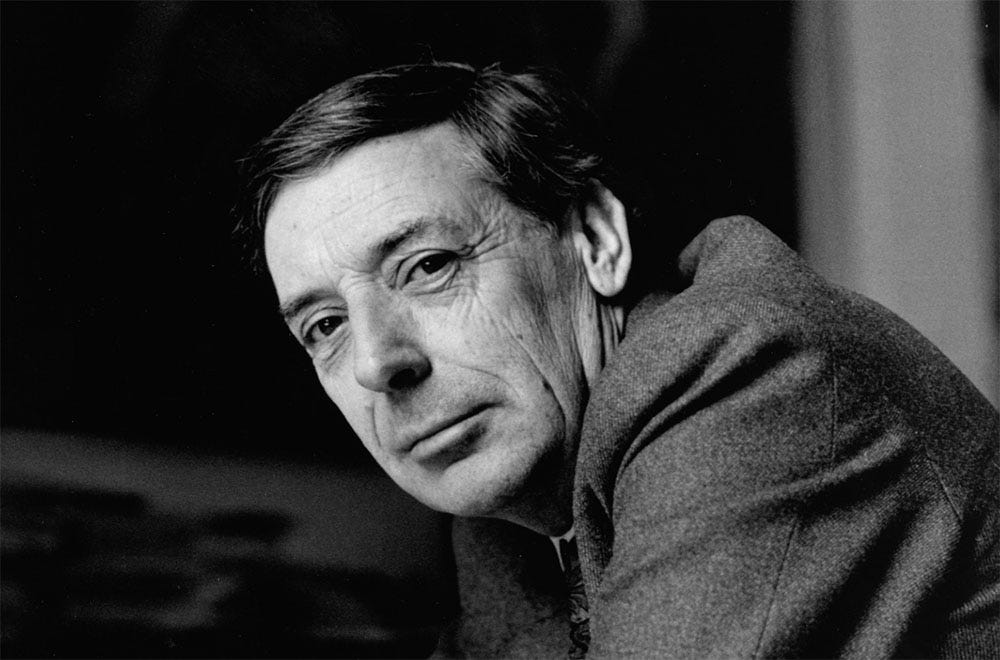
Beyond that, Williams believes that moral theories fail dramatically in understanding the limitations of practical reason—the activity we engage in to determine what to do. Modern moral theories seem unable to account specifically for the heterogeneity of practical life. It is hard to imagine a single theory that explains both why friendship is important for one reason and why justice is important for another. In this sense, modern moral theories play a special role in concealing the tragic dimension that life sometimes takes on, leaving life, in effect, exposed to its most difficult questions. Particularly, Williams argues that moral theories (here we must recall issues of rights and utility maximization) ignore the fact that sometimes choices are justified precisely because they are our choices.
If we take a brief pause, we can put it this way: if you seek a serious historical account of the rise of morality as a social phenomenon and as a form of socio-political critique, the book to turn to is Conflicts in Modernity by MacIntyre. On the other hand, if you're looking for an analytical discussion that directly confronts the most dominant moral theories in academia, the book to turn to is Ethics and the Limits of Philosophy by Williams. Of course, both books do both things, but these are the strengths of each. Unfortunately, I won’t be able to go into all the theoretical considerations for why this picture, in practice, prevents us from having a sound ethics of human life and why an alternative must be sought.
That said, the description at the beginning of this discussion should give you some sense of why these two philosophers, in effect, reject the very terms in which moral discourse is conducted. It should do so because descriptions, by their nature, contain a multitude of possible thoughts and directions for our lives. In a way, they are a subtle variation of stories. As mentioned, if you still feel you need more, my recommendations are before you.
So what is the alternative, at least in terms of public discourse? It seems that there is broad consensus that there is much value in speaking about the various interests that individuals and groups have. Without a doubt, as Williams points out, the theory of interests in its Marxist formulation has many problems, first and foremost political ones. But discourse on interests runs deeper in our cultural heritage and is not necessarily tied to, say, a Leninist interpretation of Marx—the idea that if I know someone’s interest, I must impose their own good upon them. In reality, there is quite a large gap between knowing an interest and deciding what should be done about it and how to do it. Interests are things that individuals and groups possess and that are meant to guide their decision-making processes. Between interests, there is negotiation, and often justified compromises. This, too, is an inherent part of the discourse around interests.
Beyond that, a certain modern concern might be that there are some actions that must never be done because they violate something like natural rights or are absolutely contrary to maximizing the well-being of everyone, regardless of social position or personal history. But it seems to me that this is a particularly weak concern. Even for Aristotle, for instance, there are certain things that no person should ever do—such as murdering their own parents. But if we think about it more deeply, this domain is, in fact, a highly exceptional one in human life, and there is little reason to try to base our entire ethical framework on decisions made under such extreme and unusual conditions. In fact, the opposite is largely true. As MacIntyre notes, the frequent use of categories like "immoral" creates an unreasonable inflation of our practical considerations. We become extraordinarily flexible when, on the one hand, it is "immoral" to force a child to pray the Shemoneh Esrei, and on the other hand, it is also "immoral" to torture innocent people.
Instead, the recommendation would be to use what philosophers (and, more often, female philosophers) call "thick descriptions." Thick descriptions are ethically charged, non-reductive descriptions such as "cunning," "ambitious," "cynical," and so on. Like the "sanctimoniousness" we saw at the beginning of this discussion, these are expressions that carry a lot of meaning, are specific to the situation, and allow for maintaining the proper weight that practical language requires.