

Catholic theology encountered modernity from a particular position of inferiority. The central tool that enabled the Church to engage with modern ideas intellectually was the thought of Thomas Aquinas, also known as neo-Thomism. The legacy of Aquinas has broadly created one of the most significant movements in modern philosophy, but one that is rarely discussed outside circles of cognoscenti among academic philosophers. Moreover, this is a movement that, in terms of intellectual weight, competed with almost all the different traditions of thought in that arena, and with at least equal weight in terms of the evolution of philosophical thought. The dominance of Thomism in the late modern period began with Aeterni Patris in 1879. In practice, a papal document effectively made Thomas Aquinas's theology the official and educational response of the Church to the intellectual threats of modernity.
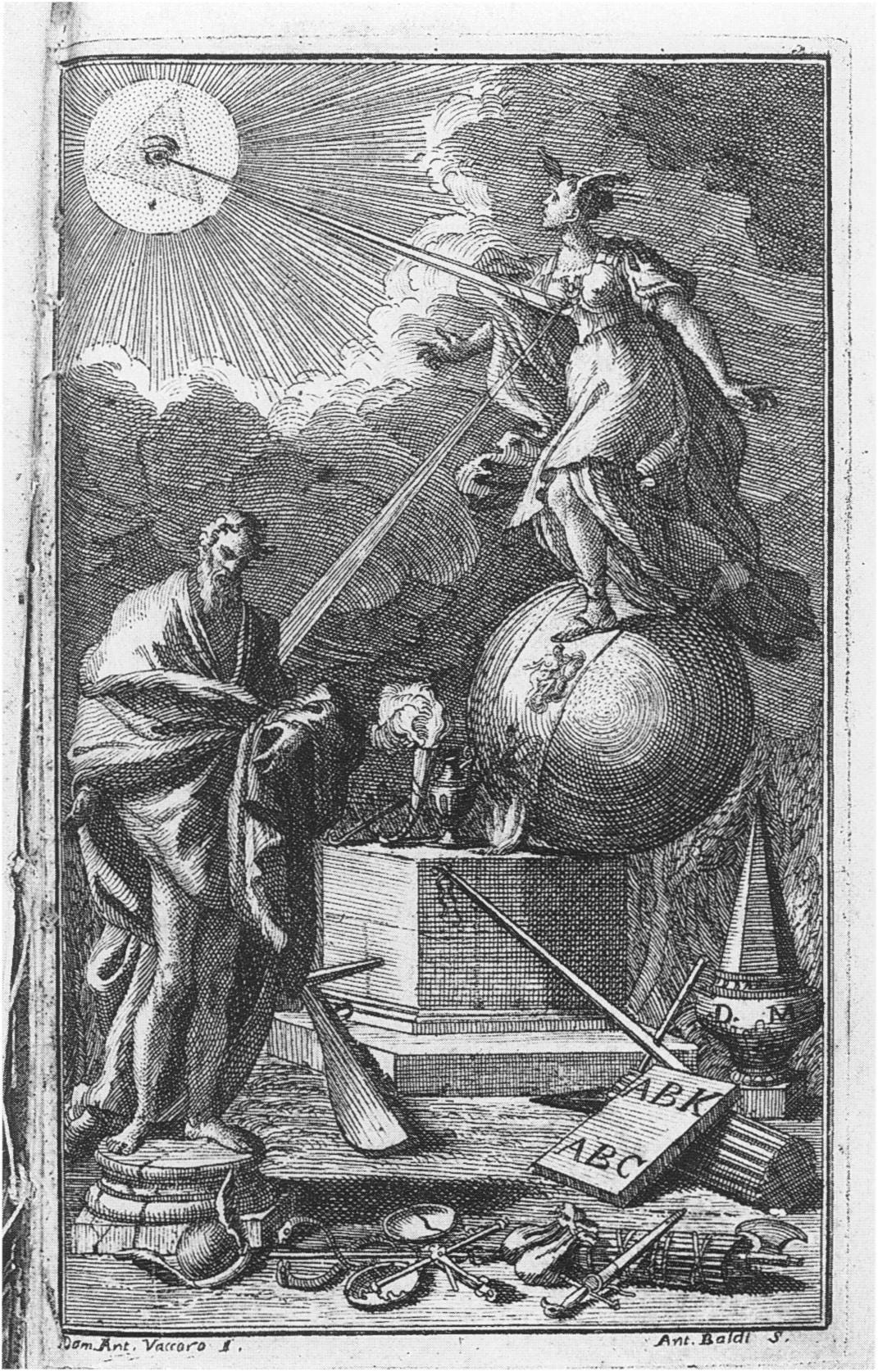
(Frontispiece of Giambattista Vico’s La Scienza Nuova, 1730 ed.)
But there was a problem. Most neo-Thomists wrote extensively about 'Thomistic doctrine.' Their entire orientation to reading Aquinas stemmed from the unique problems of their historical moment. There was another problem. The neo-Thomists strove for a kind of comprehensive theological science, which led to the creation of many handbooks on Aquinas's doctrine, similar to those on Einsteinian physics. This is a trick that works well with physics, because we're indeed dealing there with modern science with technique that has various ways to master it, but less well with theology, which is a medieval science that requires, in practice, 'getting dirty' with the material a bit to be able to smell it. The result of the second problem was that inevitably, against personal and exciting philosophies like those of Nietzsche, Kierkegaard, Hegel, Kant, etc., a kind of puppet proud of its dogmatism (in the 20th century, of course, Thomism already looked different) was placed. The more serious problem was naturally a result of the first and second combined. Everyone talked about Thomas, but no one was interested in what interested Thomas, or in reading him directly without the pre-made mediation for our contemporary problems.
It is at this point that the new theologians emerge at the beginning of the twentieth century. In this short series of posts, I want to present to you the movement of "New Theology" (Nouvelle théologie). A movement that inscribed on its banner the "return to sources" of Catholicism, including Thomas, in a way that would be more faithful to the historical problems that the Church Fathers dealt with, so that it would be possible to take their way of dealing with them, and not ready-made doctrine, as the guiding line of the Catholic response to the intellectual problems that modernity poses to it. We'll start by introducing the leading players of this movement in this post, and in subsequent posts, we’ll delve into the actual thinking they proposed.
Henri de Lubac and Hans Urs von Balthasar are two of the most impressive theologians that the 20th century produced. They are both Catholics. They are both – and this shouldn't matter to you, but I know it does – praised by Pope Joseph Ratzinger, who, in a certain sense, continues their movement, as theologians he most appreciated. So, generally speaking, there are at least two reasons to think about them seriously.
But where did they come from? Well, in the 19th century, the Catholic Church confronted the challenge of modernity with full force. Until then, its concerns had shifted to other territories, such as the Protestant threat or its waning political power. The 'challenge of modernity' here refers specifically to the challenge of modern philosophy, which, with the expansion of various educational systems, began to constitute for the first time in history a real political force. The most discussed philosopher, of course, was Kant – but all of German idealism caused trouble. The thinking about new science as something fundamental to understanding the world caused difficulty. The Church had to respond to this matter, and remembered, broadly speaking, that its scholars kept talking about some Thomas Aquinas, who from the 16th century (for reasons we won't go into here) gained momentum in Church scholarly circles within the framework of Counter-Reformation struggles, despite having written in the 13th century himself.
In the 20th century, the movement of "New Theology" began to develop within the Church. Among them, Henri de Lubac.
Henri de Lubac was an exceptionally prolific theologian. Just a glance at his bibliography and you immediately get weak in the knees. Of course, the quality of some works is better than others, but the quantity of quality works is phenomenal. De Lubac was careful to return to the Church Fathers (Origen and Augustine were his favourites, but there aren't many neglected ones there) and read them in their historical context. He was also careful, when he wrote theology, that it would be closer to the way people today could understand their faith through it. This combination, in practice, created real competition for neo-Thomism: here is theology with historical awareness that helps it grapple with contemporary problems. He even presumed to understand Thomas better than the neo-Thomists, which caused an ongoing discussion that broadly continues to this day. About his theology, the next post.
The second figure we'll deal with, only indirectly, is Hans Urs von Balthasar. Von Balthasar was a student-colleague of de Lubac. Hans Urs von Balthasar is the Catholic answer to all the Tillichs, Bultmanns, and Kierkegaards in their various forms. De Lubac called him "probably the most cultured man alive." And not without reason. Balthasar's theology presents Catholic theology from an angle that sees in action, in the drama of existence, the real arenas in which faith is played out. His first serious theological trilogy is titled "The German Soul," in which he discusses the thought and work of a truly dizzying number of intellectual figures from the last three centuries. All these discussions he wove into a fascinating theological narrative.
Von Balthasar wrote a plethora of small treatises, like the origin of existential anxiety in Christianity, through respectable parts of his Theo-Drama, to the book on de Lubac's theology – all excel in being non-dry, and remarkably learned. Von Balthasar's book on de Lubac's work and thought, particularly his response to secular criticism of Christianity, will be the focus of the following posts in this series.