

Pornography has become a given. It's not a topic that the press dwells on, nor is it discussed much in educational or academic forums. Part of the reason is that this is essentially a discussion that has already taken place in the recent past. In the 1970s, there was a lively debate in the US and Britain around the topic of pornography. In a way that might surprise some young people, this topic was a hot subject for public philosophical discussion. I want to argue that many of the problems pornography brought with it are actually a kind of parable through which we can understand the potential problems AI will bring to the humanities, problems that are actually an intensification of a more general situation that has already occurred.
Without committing to a specific thesis regarding pornography's impact on our erotic lives, we can briefly summarize research consensuses on the topic. For instance, it seems that people, especially men, who watch pornography typically have lower commitment to their relationships, and both their satisfaction and that of their partners with the sexuality in the relationship is lower; the likelihood of pornography viewers breaking up a relationship is almost double, and increases according to consumption amount (though decreases among married couples); and it seems pornography also increases the likelihood of believing in what is called "rape myth" (the tendency to downplay the harm experienced by a rape victim) and a higher likelihood of marriage dissolution. Fairness requires adding that research shows much depends on the manner of consumption and various circumstances, and causal connections are complex to establish in such studies. Additionally, it appears there are certain forms of use, such as couples watching pornography together, that actually enhance the quality of relationships.
I don't want to dwell on the experimental aspect. I think today, with the perspective of time, the damage pornography has done to the erotic and romantic lives of most people in most situations is evident. I think that with the rise of AI, we are exposed to a new but similar danger to that of pornography, and to some extent we are already suffering its consequences. I'll briefly recall the problems that existing literature claims are prevalent, and then proceed to discuss in depth the analogy to the pornography problem.
The crisis of the humanities around the world is something that has been discussed since about the 1960s. Whether it's Charles Snow's famous work The Two Cultures (1959) or Allan Bloom's more somber work The Closing of the American Mind (1987), or more modern expressions like Martha Nussbaum's Not for Profit (2010). The reasons for the crisis in the humanities are many, but clearly at their base are economic reasons, the politicization of the humanities, educational and economic preferences to focus on non-humanistic professions, and finally, as all these works emphasize, the humanities require the cultivation of personal education that includes the ability to read extensively, nurture personal knowledge, and be capable of constructing and criticizing arguments. Humanistic education, however we define it, requires deep and long-term commitment – and this is less available in a world of instant gratification on the internet. The analogy to pornography almost writes itself.
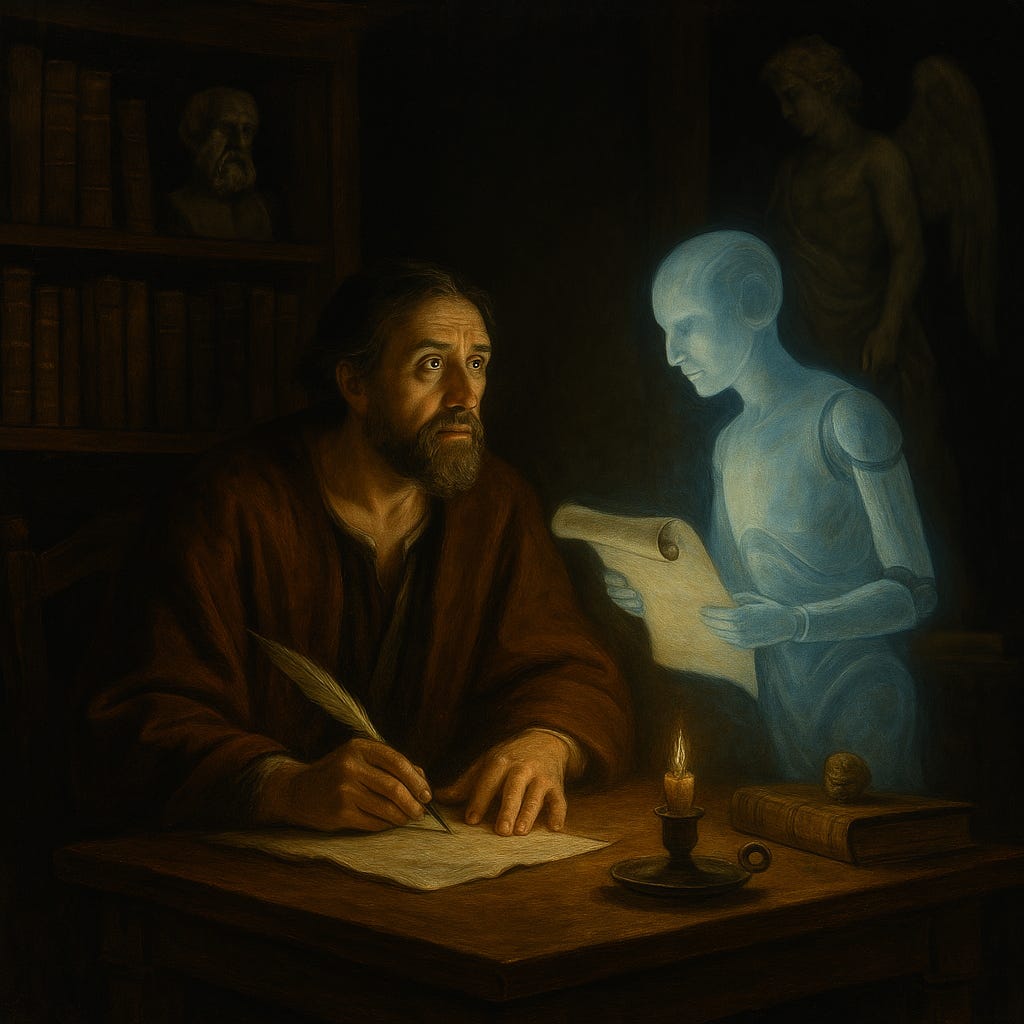
The central threat to the humanities, as in the case of pornography, is what has often been termed in literature as "objectification." Objectification is a collective term for a process that is conditional on technological renewal, but its essence is in transferring the internal logic of technology to human practices and creating a continuum between the internal logic of technology and human existence. Just as production technology allows the creation of copies of the same product for mass consumption, one can speak, like Walter Benjamin, of the disappearance of the "aura" – the uniqueness and locality of the artwork in favor of less-committed and more immediately gratifying modes of art consumption. Alternatively, pornography itself, as we have seen, is not just "another activity" of human sexuality, but has an influence on older human practices, such as marriage. The ability to consume immediate sexual satisfaction through objects available everywhere erodes the eroticism that is also at the foundation of the institution of marriage.
Spiritual life, whatever it may be, depends largely on an eroticism that the process of objectification tends to eliminate wherever it reaches. To better understand the line of thought behind the connection here between the phenomenon of pornography and the erosion of the humanities, let's present a brief story and illustration. One of the critics we mentioned, Allan Bloom, wrote his book The Closing of the American Mind on the importance of reading the Great Books for spiritual life. Twenty years after Bloom stopped teaching, he came to give a lecture at Cornell University, and of course, certain students hung a sign on the balcony opposite his lecture: "Great sex is better than great books." In his book Love and Friendship (1992), Bloom sums up the thesis of his book with this anecdote, along with his response: "Of course, but you can't have one without the other."
In this book, Bloom also offered his thoughts on romance and modern love. In one chapter, he analyzes Stendhal's work The Red and the Black (1830) and specifically the descriptions of sex scenes there. Bloom's claim is that the descriptions of sex in the book, such as "when Julien entered Madame de Rênal's room, one could say in a prosaic style, that he had nothing left to desire" or "she had nothing more to refuse him." do not reflect prudishness. The restraint Stendhal employs reflects the conviction that the psychological effect and allusions are far more important than the act itself. More importantly, according to Bloom, the details of intercourse as they might be reproduced in words and images are not the main issue. In fact, the essence of the sexual encounter takes place in the imagination of the two people around the unique relationship they maintain – an encounter that an outside observer cannot see. Bloom writes:
Everything is in the sentiments leading up to the bodily act and following upon it, the attractions and repulsions connected with this fulfillment, and the spiritual exaltations and excesses surrounding what is in the world of nature the most banal and ordinary satisfaction. This is what is wrong with pornography. It distorts and impoverishes sensuality.
The essence of pornography is redirecting human eroticism from the relationships that depend on it, such as marriage, to imitations that have nothing to do with the mystery of the encounter itself. It turns the mysterious encounter into a product of mass consumption. Once upon a time, it was a simple philosophical truth (as reflected, for example, in Plato's Symposium) that knowledge is connected at its core to human eroticism as well. Today, it seems, it's difficult for us to understand the very connection. Knowledge is perceived as something objective not in the epistemological sense that it is connected to the secrets of the universe that are similar to themselves everywhere, but precisely in the sense that it is subject to mass consumption, reproduction, and the absence of long-term personal commitment. Knowledge undergoes a process of objectification that at its peak turns it into information available to all. The dissemination of knowledge also requires restraint in order to flourish.
One might accuse me of seeing things too darkly. After all, we survived the development of television, computers, and even the internet. Surely we will manage to integrate the new technology in a socially productive way as well. If there are specific problems we know how to identify, surely we will know how to solve them too. Furthermore, all this technological progress has brought with it dizzying possibilities for original developments in the humanities that were not possible without it.
To this, three things must be answered: (1) The nature of processes like objectification is that they largely resist being broken down into specific problems. To this day, there are those who will deny the horrific impact of pornography on eroticism in the West. Moreover, not all problems can be fully formulated in advance, but a healthy practical and historical sense should guide us in understanding what might happen. (2) I disagree with critics that we have properly incorporated older technological developments, from television to the internet. It seems to me, and among other things the state of the humanities today will prove, that we are already in the depths of such a deep process of deterioration that we tend to deny or even readjust our expectations of spiritual life in light of technological developments, instead of the other way around. In this sense, the new threat from AI is not really new, but it could indeed be deadly. (3) Indeed, technological developments can also enhance research. For example, AI has been used to decipher papyri that without AI would have remained undeciphered. But it seems to me that even if we collect here and there such developments, it will not be enough to change the balance of dangers that AI poses to the humanities.
On a practical level, I have only to suggest a proposal that will be anathema to the new futurists. The academy in particular has a duty to adopt measures as draconian as possible to limit the use of AI in the context of nurturing spiritual life. These limitations, just like the limitations in Stendhal's writing, will allow the creative imagination more room to flourish. If this proposal involves returning to "ancient" educational practices – we may also gain things that were more common in the past among those engaged in the humanities, such as erudition and breadth of perspective.