


The internet was in an uproar. It appears that one of Anthropic’s models succeeded in mapping one of the most complicated proofs in mathematics, the one that proves the validity of “Fermat’s Last Theorem” (who remembers the book?), into LEAN, a technical language that allows rigorous checking of the validity of mathematical proofs. Interestingly, it appears that the version of the proof that the AI managed to translate is close to, if not actually based on, the proof by Wiles himself from the 1990s. The significant achievement, of translating a mathematical proof so complicated that it has been taught as a separate subject in dedicated mathematics courses, was somewhat swallowed up in the hype that the one who in fact succeeded in validating the proof is an AI. This is important, because mathematicians’ proofs (for anyone who has ever tried to follow them) quite often include many “leaps” and “this is obvious” and things in that vein that drive a person out of his mind. The translation into the technical language of LEAN is in itself a tremendous achievement that would have taken professional mathematicians years of work. Anthropic’s AI did it in 11 days.
Nevertheless, the complexity of the problem itself and the possibility of validating so complex a proof without significant human labor raise new-old questions about the nature of mathematics. In the 1910s and 1920s a stormy debate flared up in the world of mathematics, whose consequences the mathematicians of today still feel in their own flesh: the finitude debate (the “foundations controversy”). The debate raged, broadly speaking, between Hilbert, considered by many to be the father of modern mathematics, and Brouwer, the father of the intuitionist approach to mathematics. The subject of the debate was: what actually counts as a mathematical proof? Brouwer and his school argued, broadly speaking, that only what we can construct by means of our thought, step by step, is what constitutes a valid mathematical proof. Hilbert and his school argued that as long as the system is consistent, the proofs within its framework must be accepted as mathematically valid.
Just to give a taste of it: one of the interesting things is that precisely if one accepts Brouwer’s version of what a valid mathematical proof is, it follows that we must in fact reject the law of the excluded middle. The law states that every proposition is either true or not true. For Brouwer, as long as we have no concrete proof one way or the other, the given proposition has no truth value. For example: one can claim that somewhere in the number pi a thousand consecutive zeros appear – or that they do not. A mathematician of Hilbert’s school can make this assumption useful within a certain proof he wishes to carry out in number theory. Brouwer will argue that it is illegitimate to make use of this assumption, because on the one hand we have not conducted the required search or found a proof that this sequence exists, and on the other hand the required search is infinite in a way we are not capable of, and therefore we must reject proofs that make use of an assumption of this kind.
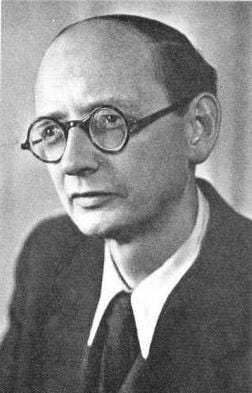
In the eyes of many, Brouwer’s position greatly influenced the philosophical school known by the name “phenomenology.” This philosophical school places great emphasis on the mode of givenness of objects. This givenness, in turn, may be a subject that can itself be treated scientifically. Nevertheless, one of the implications of this position throughout almost the entire school is a rejection of the assumption of a truth value for entities that we are unable to receive in some way.
One of the forgotten members of this school was the philosopher of mathematics Oskar Becker. In 1927 Becker published a work called “Mathematical Existence.” This work appeared in the same famous yearbook of the phenomenological school in which Martin Heidegger’s famous work “Being and Time” also appeared. Becker himself was in fact a student-colleague of Heidegger, and his philosophy of mathematics was deeply influenced – with significant deviations – by Heidegger’s philosophy. Either way, Becker tried his hand at characterizing what, in his view, constitutes mathematical existence, and I think we have now been granted a certain reminder of one of his important lessons, at least insofar as I understand them.
You see, for Hilbert what matters is that we be able to show consistency at the formal level in a finite manner. Finitude here is understood as an ideal variation: it can also be 13 million dense lines of code, as per the estimate for the latest translation that the AI made of the proof of Fermat’s theorem. In fact, Brouwer’s criterion of finitude is stricter in a certain sense, as we said: only what can be proven – as opposed to what can be assumed to be true or not true – in a finite manner may constitute a mathematical object legitimate for use. In this sense, the finitude that was set as the standard in this debate fully covers the proof recently given by the AI (that is, apart from the small matter that the proof given relies on the axiom of choice). But we know of further senses of finitude, and these too did not, in fact, pass over this debate at the beginning of the twentieth century about the foundations of mathematics.
Famously, Cantor argued – an argument which, in the end, most modern mathematicians accepted without dispute – that transfinite numbers (infinite numbers) are numbers that human reason understands exactly as it understands merely very large numbers (say, a googol). Therefore, so the argument goes, we must grant equal rights both to the very large numbers and to the transfinite numbers. Becker criticizes precisely this assumption and argues that in fact the problem of very large numbers that are still finite is an open problem in the foundations of mathematics, and if you have followed this far, you may guess why: if the givenness of the object is what matters for it to be part of the scientific project, then the comparison of transfinite numbers to large numbers does not “solve” for us the problem of the legitimacy of the transfinite numbers, but on the contrary, aggravates for us the problem of the merely very large numbers.
In fact, Becker attacks a tacit agreement in the finitude debate: the assumption according to which the finitude relevant to the constitution of the mathematical object is ideal finitude, or a finitude that we can discern by way of some contrast with mere arbitrariness. Becker argues that almost entirely similar dilemmas are raised with respect to our ability to understand merely large numbers (or numbers small enough yet too large for us), that the boundary relevant to the constitution of the mathematical object may be much “lower”: what can we really understand in our lifetime? Either we assume in advance some categorical ability to “foresee” for every proof whether it is provable by our limited means, or we take action and try to understand the proof despite its astronomical size. Either way, there are no other solutions on the table, and although the very distinction between numbers-that-are-too-large and numbers-that-are-large-but-that-we-can-master is relatively rigid, the exact boundary must, necessarily, remain open.
In this sense, already in Becker’s time there were apparently available several proofs in number theory that are without doubt too large for a single mathematician to verify. The question that must remain open in fact leads Becker to set a much tougher criterion, but one that was in his view latently accepted by Hilbert himself, regarding what finitude is, for example in numbers. Our ability to look at a pile of five balls and five pens and say, together with Frege, that this is “the same number,” or to look at five balls and at three apples and say that this is “a lower number.” In this way we can build intuition upon intuition methodically and construct numbers up to a relatively low limit, but one that there is still hope a sufficiently skilled mathematician will succeed in verifying demonstratively. In other words, the phenomenological distinction holds in any case, but its boundary is flexible and may change from case to case.
Which brings us to Lean and the growing use, so it seems, of digital verification methods for proofs in “pure” mathematics. It seems that before us lies an era in which monstrous proofs (which have in fact existed for more than a hundred years already) will multiply. The role of mathematicians, in this sense, will change in at least three ways: (a) There will be mathematicians who, like theoretical physicists, will be occupied with producing proofs that have no human verification, and these will await the labor of experimental mathematicians in order to validate them against mathematical understanding, or alternatively with simplifying monstrous proofs if this can be done by means of the technology. (b) There will be experimental mathematicians – that is, if mathematics wishes to preserve its level of demonstrativeness and not become a branch of the latest technology – whose labor will be the methodical and manual examination of the quality of those proofs of this kind that are judged worth verifying, and above all their simplification. (c) There will still be “ordinary” mathematicians, except that these will be able to avail themselves of more and more assumptions originating in the new branches of mathematics, that is, ones that they cannot verify themselves.
In this sense, in contrast to the classical debate between Hilbert and Brouwer, Becker’s phenomenological distinction will become dominant in the general orientation of the field, at least latently. This means that in some way we are facing a kind of new “foundations crisis,” except that this time a different challenge stands before us: if with Hilbert–Brouwer we were still arguing about which kind of proofs is valid, now the attainment of the phenomenological certainty that befits mathematics – what it means to understand a proof that we have secondary reasons to believe is valid – itself becomes a methodical task. This task, which stems from the phenomenological distinction, is the unpleasant truth of which mathematicians were already aware but which, in all likelihood, they have not until now been compelled to confront. In my view there is no escaping a mention here of one of the interesting distinctions in twentieth-century philosophy, which Hans Blumenberg used in order to criticize Heidegger’s philosophy, and, as we shall see, a critique that may well have relevance to the conception that Becker too, within certain limitations, holds.
A Greek astronomer named Hipparchus, in the second century BCE, faced a certain dilemma, and according to Blumenberg his temperament in approaching this problem is what established his status as paradigmatic for the philosophy of science. Until Hipparchus, so Blumenberg relates, the philosophy of science assumed that the concept of theory – the contemplation within whose framework science is done – was understood as one that is realized in the wise person in the course of his life. Cosmic truth was conceived as accessible within the course of an ordinary life, Lebenszeit. Hipparchus made a sophisticated double move: he compared his astronomical observations with those that preceded him, and discovered phenomena that could not be accessible within a Lebenszeit at all. Cosmic truth eluded theory in its customary sense. More than that, according to Blumenberg, Hipparchus faced a choice with respect to concrete astronomical problems: either to take his findings and generalize them speculatively toward a complete system, as was customary in his time, or to act to map the motion of the stars in his own time so that future generations would be able to shape better answers. Hipparchus turned to the second option with respect to certain astronomical problems and thus discovered what Blumenberg calls Weltzeit, world-time, the time of generations of human beings working in a shared epistemic enterprise.
According to Blumenberg, the modern philosophy of science relies radically on Weltzeit. In his view, philosophers like Heidegger – and, to a lesser extent, Becker – tried to return science to the time of Lebenszeit. Let us leave aside for the moment the question of whether this critique is correct or not. What is interesting is that it seems to me we are living in a period that for the first time marks the official entry of mathematics into Weltzeit: no longer feats of mountain climbing, but journeys of migration generations long. If the passion for mathematics is not extinguished (and note, the transition from Lebenszeit to Weltzeit carries within it, among other things, a transition from a heroic conception of the mathematician to a more democratic conception of him, so the risk exists), “the unpleasant truth” of which we spoke, the sacrifice of certainty for the sake of cosmic truth, may earn mathematics a renewed renaissance. For the first time, human verification of a proof may systematically exceed the span of an ordinary human life.
All that needs to be done is simply not to give up on either of the two things. Neither on the intuitive demonstrativeness of mathematics nor on the passion to explore new regions “where no man has set foot before.”