


One of the pressing questions of the eighteenth century in English thought was the question of good taste. When and how can aesthetic judgments be justified, whether regarding the simple pleasures of life or the more complex pleasures, at least partially acquired, such as reading poetry and appreciating various forms of art—pleasures whose very acquisition requires effort that, at least on the surface, demands justification. True to the spirit of eighteenth-century English philosophers, the question was often framed in terms of simple and complex sensations, as well as the relationships involved in their acquisition through training, habit, or some form of universal human nature.
For a long time, I regarded discussions of this kind—for example, perhaps the most paradigmatic discussion on the subject, A Philosophical Enquiry into the Origin of Our Ideas of the Sublime and Beautiful by Edmund Burke—as inherently obscure. The distinctions—for instance, that coffee is a taste acquired through practice, while sweetness is a primitive and therefore universal pleasure—often remained too abstract to derive anything like the distinction between simple pleasures and refined pleasures, or the preference for one over the other under certain conditions.
The problem is this: the concepts of simple and complex sensations, characteristic of the English empiricist tradition, are too simplistic to address the vast variations in human taste. For example, we might want to say that the enjoyment of bread is a simple pleasure, while the enjoyment of something like Schoenberg is a complex one. But it seems too easy to offer counterexamples: there are people for whom the enjoyment of bread undoubtedly involves learning to distinguish between various flavors, sourdoughs, etc. On the other hand, enjoyment of Schoenberg is certainly a learned pleasure, but even a brief acquaintance with his admirers will surely show that not all of them are Adorno. It seems that in this story of pleasures tied to good taste versus simple pleasures, there is more than meets the eye.
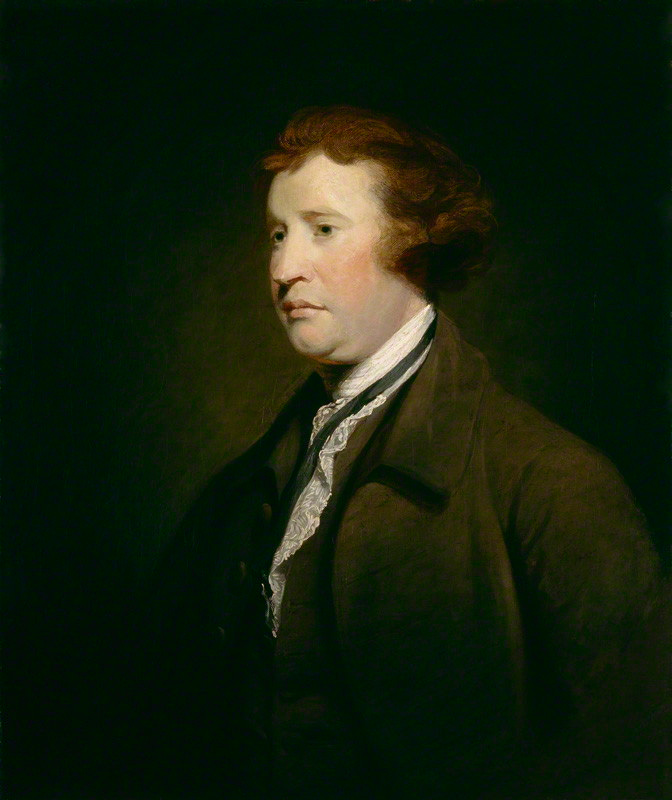
Recently, a friend of mine (David Pilavin) sent me a wonderful article by a philosopher—David Stove—who, as my friend rightly noted, has not received sufficient recognition, on the topic of "Living Retired." This article is remarkable for many reasons, but one of them is that it contains insights that, I believe, could help frame the discussion of good taste in a more fruitful way. Stove shares the following story, which offers us a taste:
David Hume is another example. The most successful British author, in terms of money, up to that time; a diplomat in Paris whom the French actually respected and liked; an important official of the Foreign Office in London: he left it all in 1771 and retired to his native Scotland. Here he concentrated on his friends and his food. He worked hard at improving his own cooking, but was never very particular as to quality. Arriving uninvited at meal time at the door of an Edinburgh friend, who protested that she had no meal prepared for him, Hume reassured his hostess: "Ye ken I'm no epicure - just a glutton." A few weeks before he died in 1776, he told Adam Smith that he could not think of any period of his life that he would as willingly live over again as these last years.
Stove brings up David Hume as an example of a fairly rare human type—one who can enjoy a life of retirement from work. Of course, Hume continued to write, but he withdrew from a life filled with social obligations. According to Stove, social obligations are what keep most of us in what might be called a state of happiness. However, there exists a distinctive category of people capable of enjoying life and being happy even after leaving social obligations behind. For Stove, such people are aesthetes of a certain kind. Here, it seems necessary to divide aesthetes into two types: Epicureans and Humeans.
Epicureans are those aesthetes who pursue refined pleasures in particular, whether those pleasures are intellectual, artistic, or social. Think, for instance, of Kierkegaard’s “A.” Like the Humean, Kierkegaard’s aesthete can function outside the context of direct social obligations (or, more precisely, only in such a context). Unlike the Humean aesthete, Kierkegaard’s aesthete is engaged in a certain pursuit of the rare and unique. In eighteenth-century terms, they chase the sublime. Humeans, on the other hand, are aesthetes primarily interested in the long-term satisfaction that pleasures can provide. Notice that one group of “aesthetes” is excluded here—let’s call them bad aesthetes. We are specifically discussing people who “know how to enjoy life,” and the question arises about the relationship between satisfaction and the types of pleasures among such people.
Here, Stove’s discussion helps sharpen our focus: in both cases, we are dealing with a certain kind of life. Contrary to Stove’s position, and also that of Kierkegaard’s “A,” we do not seem compelled to conclude that this is the decisive form of knowledge for the good or happy life as such. It seems more fruitful to refine the discussion, drawing on Aristotle. Pleasure is a necessary part of a happy life, but identifying pleasure with happiness itself is a mistake (as Aristotle rightly points out, citing Plato on the matter). Hume, for instance, serves as a good counterexample: while it is true that he exemplifies a type of knowledge conducive to happiness in the terms Stove discusses, it would not be correct to say that Hume’s happiness derived solely from his aestheticism. As noted, Hume continued to write and live what is traditionally called the vita contemplativa long after abandoning his social obligations. In Kierkegaard’s case, this is even more evident—his own discussion demonstrates how the aesthetic life alone is insufficient for a fulfilling life.
In fact, following Aristotle, we might want to say something along the lines of: knowing how to enjoy the right things is a part of virtue. Virtue is a kind of hexis—an active condition—that is, a complex (context-dependent) disposition we work to cultivate. To some extent, it is a necessary condition, since we would not call a person happy if they could properly enjoy nothing. But even as we limit the discussion, the question arises about the type of knowledge (know-how) involved in each kind of pleasure, which might indicate different kinds of lives.
For instance, Stove characterizes the self-sufficient person in terms of enjoyment in ways that are strikingly close to Aristotle’s ideal of eudaimonia:
[…] that to be capable of happy retirement, you need to be an aesthete, in a broad sense of the word. I mean you must be capable, like a child or a poet, of simple, passive, sensory enjoyments. If the pursuit of money or power or knowledge has absorbed you completely, so that you cannot now enjoy things like the sky, or the ocean, grass and trees, the music of Handel, simple good food - well then, your retirement is ill-omened indeed. An undeservedly forgotten 19th-century writer, W.R. Greg, said somewhere that he could not respect anyone who could not sit all day beside a stream, without doing anything more than occasionally throwing a pebble into it. This is perhaps a fraction severe: half a day might be fairer. But the general idea of Greg's test is absolutely right, and one reason why so many retirements are miserable is that few people can pass a test of this kind.
Let’s set aside Stove’s remarks on Handel for a moment, as his test is far more indicative of the kinds of pleasures we should cultivate or preserve throughout our lives. Undoubtedly, as Stove points out, there is nothing "natural" about an adult retaining the kinds of simple pleasures he associates with children. This involves a very particular form of know-how, and the test Stob proposes can easily be considered a form of practice and acquired aesthetic sensibility. The counterexample, of course, is something like the level of understanding and enjoyment that Kierkegaard’s “A” develops for Mozart’s opera Don Giovanni—an experience he eagerly anticipates at every performance.
Now we can return to our earlier discussion and revisit the eighteenth-century questions concerning the relationship between simple pleasures and complex, or refined, ones. It seems this is not merely a question of classifying pleasures but is more precisely about the kind of life associated with each of these pleasures. The characterization of "simple pleasures" follows someone whose way of enjoying things emphasizes the long-term and stable satisfaction tied to their activity. Such a person would, indeed, enjoy bread in a straightforward way. By contrast, someone who pursues refined pleasures might either not enjoy bread at all or only enjoy very particular kinds of bread, depending on how they’ve taught themselves to distinguish between delicious and non-delicious bread. For adults, neither of these pleasures is simply "natural."
When we ask about the good life—i.e., the life in which a person cultivates the active conditions that constitute what we call "happiness"—which of our aesthetes contributes more to this life? Must we cultivate a certain abstraction of our pleasures, ensuring they suffice for us, or should we develop refined pleasures that allow for variety in our enjoyment? In a sense, these types of lives are not identical. The life of simple pleasures is, to some extent, a life that has cultivated a kind of asceticism, moderation, which we associate with people of virtue. On the other hand, a life of refined pleasures is associated with more noble lives, lives in which more of a person’s capabilities are brought to fruition.
If this description is accurate, we must say that a life of refined pleasures is first and foremost a sign of a life in which a person has developed intellectual and practical abilities that we associate with virtue—the realization of human excellence. In contrast, the life that enjoys simple pleasures signifies someone moderate and, at best, someone who has clear boundaries for their life and what satisfies them within those limits (in the most direct translation of eudaimonia, “self-sufficient”). To some degree, the aesthetic emotion most characteristic of the life of simple pleasures is contentedness, while the aesthetic emotion most characteristic of the life of refined pleasures is sublimity. The relationship between the two resembles another Aristotelian discussion: the relationship between the virtue of magnanimity and other virtues. Concerning this virtue, Aristotle claims: “Magnanimity seems to be a sort of ornament of the virtues, for it makes them greater and is not possible without them. For this reason, it is hard to be truly magnanimous, as it is impossible without the beauty that belongs to goodness.”
If this analogy holds, it addresses a very fundamental intuition we have about the nature of aesthetes we encounter. Those who have lost the ability to be content with little and are concerned solely with the rare, versus those who have both. It is not unlikely that someone who knows how to appreciate Handel might withdraw from their social obligations and no longer find satisfaction in life except for those rare moments when they listen to Handel. On the other hand, someone who withdraws from social obligations but has at least developed the knowledge of simple pleasures will enjoy a form of pleasure we consider essential for happiness in general. Such a person, if they also know how to appreciate Handel, has refined their capacity to enjoy properly.
This analogy also helps illuminate another intuition we hold on the matter. Magnanimity in Aristotle has a corrupt manifestation in those who aspire to great things but are, in truth, incapable of them. These are the people Aristotle calls “vain.” In our analogy, such people would be aesthetes who lack basic contentment or, alternatively, the basic virtue that might render their engagement with high art an elegant adornment. These are people whom Aristotle, and later social theorists of decline, could not help but ironically call the “beautiful and the good.”